Logging, slash-and-burn agriculture, land development, and forest fires are major factors contributing to the high deforestation rate in the Philippines
Starting in the 1960s, Philippine mahogany was cut down almost entirely to extinction. The disappearance of these trees led to soil erosion, contaminated waterways, and indigenous communities displaced from their land. As more forest is lost, biodiversity drops, plant, and animal species go extinct, and indigenous communities lose the productivity of their land.
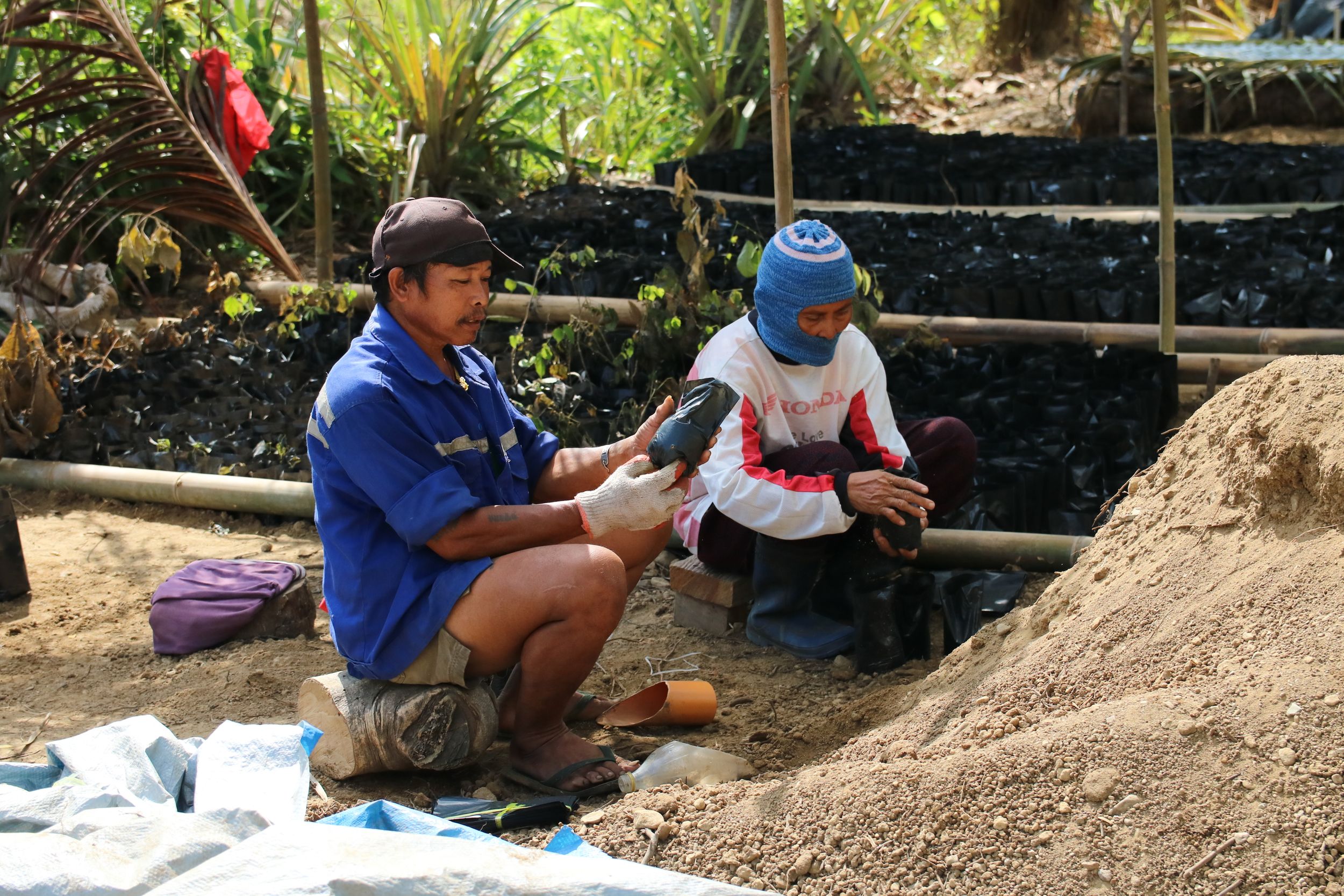
With the support of local communities and the government, we established our first reforestation and landscape restoration sites in 2021 in remote areas of the southern regions. Our team worked through fully-remote training, communication barriers, and travel restrictions to safely establish sites in Kibuwa and Canitoan. Despite these unforeseen roadblocks, our team is working closely with the Filipino community to restore their local forests and environment.